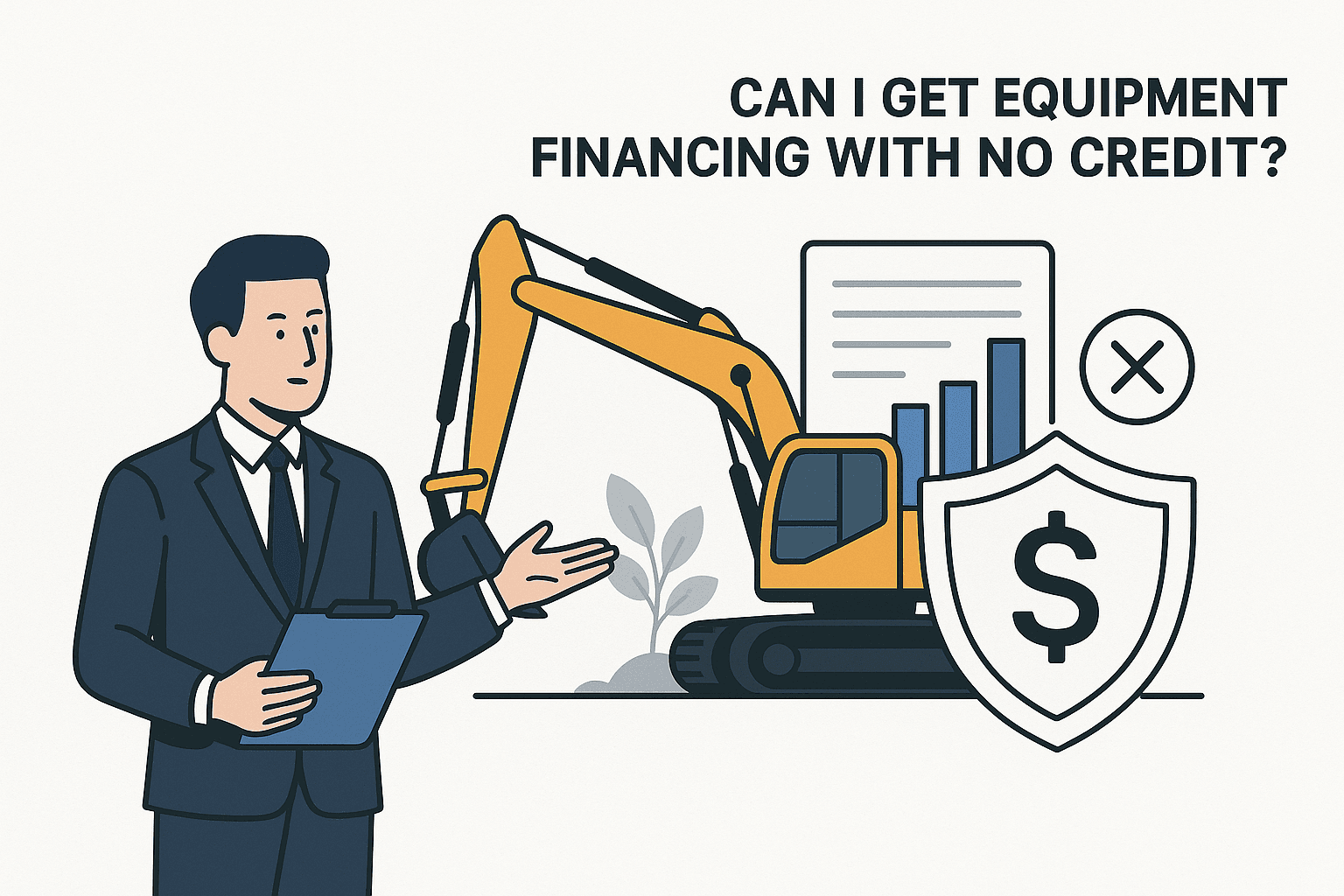
Equipment Financing with No Credit Check: Understanding Your Options When Traditional Lending Isn’t an Option
Equipment financing with no formal credit check is a niche but accessible pathway for business owners, primarily through specific alternative lenders who use different metrics—like bank transaction history, equipment collateral value,, learn more about can i get a mortgage with 600 credit score?, learn more about can i get a mortgage with 500 credit score? or revenue—to assess risk instead of a traditional credit score. This approach exists because many small businesses, especially new ones or those rebuilding, have strong cash flow but weak, learn more about what is private mortgage fund? mortgage lender overview | rateroots, learn more about what is archway fund? mortgage lender overview | rateroots, learn more about what is lendterra? mortgage lender overview | rateroots or nonexistent business credit. Lenders offering these programs are not ignoring risk; they are simply measuring it differently. They might evaluate your company’s bank deposits over the last 3-6 months, the specific piece of equipment you’re financing (using its resale value as security), or require a larger down payment to offset their risk. It’s crucial to understand that “no credit check” rarely means no underwriting at all. Instead, it signifies a shift in what the lender considers most important: your business’s present financial activity and the hard asset you’re purchasing, rather than your past credit history.
The landscape for these loans includes equipment vendors with captive financing arms, specialized online alternative lenders, and some fintech platforms. However, this convenience and accessibility come with trade-offs. You can generally expect higher interest rates or factor rates, shorter repayment terms, and potentially stricter requirements around the equipment itself compared to traditional bank loans. This isn’t a flaw in the product, but rather the economic reality of lending based on different, often perceived as riskier, criteria. For a business that needs a $50,000 excavator to start taking on contracts or a $20,000 commercial oven to fulfill new orders, this trade-off can be the calculated cost of immediate growth.
The Philosophy Behind “No Credit Check” Lending
To understand this market, it helps to step back and look at the philosophy of credit itself. The modern FICO score is a relatively recent invention, formalized in the late 1980s. For centuries before that, lending was intensely local and personal. A banker knew the shopkeeper, the farmer, and the blacksmith. Credit was extended based on character, reputation, and observed cash flow—the coins in the till, the harvest coming in, the contracts on the books. The “no credit check” model, in a way, is a digital-age return to these principles, using data analytics instead of a handshake.
Traditional banks rely heavily on credit scores because they are efficient, standardized predictors of repayment behavior for millions of consumers and businesses. They answer the question, “Has this borrower reliably paid back debts in the past?” For a new business, the answer is often “no,” not because they are unreliable, but because they haven’t had the opportunity. Alternative lenders step into this gap by asking a different question: “Is this business generating enough cash right now to support this payment, and is the asset we’re financing valuable enough to secure the loan?”
This is a fundamental pivot. It moves the basis of the loan from the owner’s financial past to the business’s operational present and future. The lender’s security becomes twofold: the ongoing revenue stream and the physical equipment, which can be repossessed and resold if necessary. This is why the equipment itself is so central to the transaction. A lender will be far more likely to finance a standard, brand-name CNC machine with a strong secondary market than a highly customized, bespoke piece of software-integrated machinery that has little resale value.
How Lenders Underwrite Without a Credit Score
When a lender says they offer equipment financing with no credit check, they are typically bypassing a hard pull on your personal or business credit report from the major bureaus (Experian, Equifax, Dun & Bradstreet). However, they are not flying blind. Their underwriting process substitutes other rigorous checks, often focusing on three key areas: bank statements, the equipment, and basic business viability.
Bank Statement Underwriting: This is the most common alternative. Instead of a credit score, you’ll be asked to provide 3 to 6 months of consecutive business bank statements. The underwriter will analyze your average daily balance, monthly revenue, the frequency of deposits, and any overdrafts. They’re looking for consistency and growth. A business with $15,000 in deposits every month is a better candidate than one with a single $50,000 deposit followed by months of minimal activity. They are essentially creating a “cash flow score” based on your actual business performance.
Collateral-Based Underwriting: Here, the loan is structured almost entirely around the value of the equipment. The lender will assess the make, model, age, and condition of the asset. They will determine its Fair Market Value and, more importantly, its forced liquidation value—what it could be sold for quickly at auction. The loan-to-value (LTV) ratio will be conservative, often capping at 50-70% of the equipment’s appraised value. This ensures that if they need to repossess, they can recoup their funds. In this model, your credit history is less relevant because the loan is overwhelmingly secured by the physical asset.
Revenue-Based Assessment: Some fintech lenders use software to connect directly to your business’s accounting software, payment processor, or e-commerce platform. They analyze real-time revenue data, growth trends, and customer retention metrics. This is common for businesses with strong online sales or subscription revenue. The lender can see the health of the business as it happens, making a historical credit report seem like an outdated snapshot.
Consider this scenario: A food truck owner needs a $25,000 generator. Their personal credit was damaged during a medical emergency years ago, and their business is only 10 months old. A traditional bank loan is unlikely. However, an alternative lender reviews their bank statements, showing consistent monthly revenue of $8,000 from festival circuits, and sees that the requested generator is a new, in-demand model from a reputable brand. The lender approves the financing with a 20% down payment, securing the loan directly against the generator. The business gets the critical equipment, and the lender has a manageable risk profile based on cash flow and collateral.
The Real-World Trade-Offs: Cost, Terms, and Requirements
Choosing a no-credit-check path is a strategic financial decision, and it’s vital to go in with eyes wide open to the trade-offs. The primary trade-off is cost. Because the lender is accepting a different, often perceived as higher, risk profile, the cost of capital is higher.
You will rarely see a traditional annual percentage rate (APR) with these products. Instead, you might encounter a factor rate (e.g., 1.25) or a higher simple interest rate. A factor rate of 1.25 on a $50,000 loan means you pay back $62,500 ($50,000 x 1.25). It’s critical to convert this to an approximate APR to compare it with other options, as the term length drastically affects the true cost. A factor rate of 1.25 on a 2-year term translates to a much higher effective APR than on a 5-year term.
Common characteristics of these financing options include:
- Higher Effective Interest Rates: APRs can range significantly but often start in the mid-teens and can go much higher, depending on the lender, your business’s cash flow strength, and the equipment.
- Shorter Repayment Terms: Terms may range from 1 to 5 years, whereas traditional equipment loans can extend to 7 or even 10 years for longer-lived assets.
- Down Payment Requirements: It’s common to see requirements for 10%, 20%, or even more as a down payment. This immediately reduces the lender’s exposure and demonstrates your commitment.
- Focus on Newer Equipment: Lenders heavily prefer financing newer, name-brand equipment with established resale markets.
- Personal Guarantees: Even without a credit check, most lenders will still require a personal guarantee from the business owner(s). This is a legally binding promise to repay the debt personally if the business cannot.
Moreover, the application process, while focused on different documents, is not necessarily easier. You must have your financial records in order. Inconsistent bank statements, unexplained large withdrawals, or frequent overdrafts will likely disqualify you just as quickly as a poor credit score would elsewhere.
Navigating Your Options: A Practical Framework
So, how should a business owner approach this? Think of it as a three-step process: internal assessment, market research, and strategic decision-making.
First, conduct a clear-eyed internal assessment. Why is your credit not an option? Is it because the business is new (a “thin file”), or is there a history of delinquencies? Gather 6 months of bank statements. Calculate your average monthly revenue and profit. Be prepared to explain any anomalies. Know the exact specifications and cost of the equipment you need.
Second, research the landscape of lenders. They generally fall into a few categories:
- Captive Financing Companies: These are subsidiaries of equipment manufacturers (like John Deere Financial or Dell Financial Services). They often have programs for new businesses and may use proprietary scoring that weighs your relationship with their brand.
- Specialized Alternative Lenders: Online lenders like Balboa Capital, Forward Financing, or similar specialize in this space. They have streamlined processes for bank-statement-based underwriting.
- Fintech Platforms: Companies like Lendio or Fundera are marketplaces that can connect you with multiple lenders who offer no-credit-check products, allowing for comparison.
Finally, make the strategic decision. Use this financing if the equipment will directly and measurably increase your revenue or profit enough to cover the higher financing cost. The math must work. If the new commercial printer allows you to take on a contract that adds $5,000 monthly profit, and the loan payment is $1,200, it’s a smart move. If the benefit is vague or long-term, the high cost may not be justified.
Building a Bridge to Better Financing
Perhaps the most important perspective on “no credit check” equipment financing is to view it not as a permanent solution, but as a strategic bridge. It allows you to acquire the asset that helps your business grow, establish a payment history, and build your business credit profile for the future.
Here’s the thing: making every payment on time for a 2- or 3-year equipment loan will often be reported to business credit bureaus. This creates a positive credit history where none existed. Simultaneously, the new equipment should be helping you generate more revenue and profit, strengthening your balance sheet. When the loan is paid off, you own a valuable asset free and clear, and your business is in a stronger financial position. Your next financing request—for more equipment, a line of credit, or even a traditional term loan—will be viewed through a much more favorable lens by a wider array of lenders.
The journey of business financing is rarely linear. Equipment financing without a traditional credit check exists because the real economy of small business is messy, personal, and doesn’t always fit into the neat boxes of standardized credit models. It acknowledges that a business’s potential is not solely written in its credit past, but is actively being built in its daily operations and future ambitions. By understanding the mechanics, costs, and strategic purpose of these tools, you can make an informed, empowered decision to acquire the machinery your business needs to build its future, one payment at a time.
