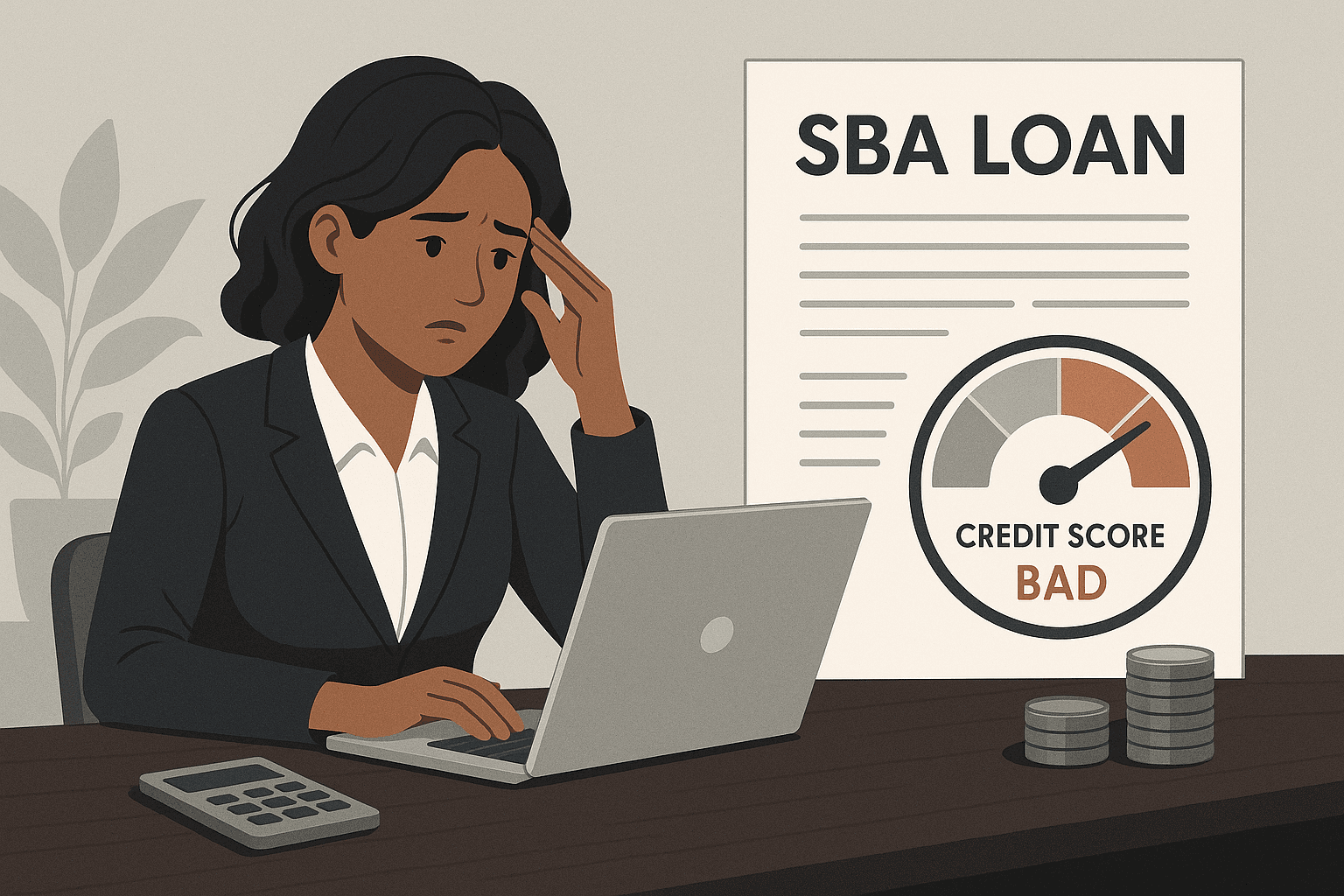
SBA Loan Bad Credit: Navigating the Realities of Government-Backed Financing
Securing an SBA loan with bad credit is a nuanced, challenging, but not impossible, learn more about can i get a mortgage with 500 credit score?, financial endeavor.The direct answer is that while the U. Learn more about learn more about what is private mortgage fund? mortgage lender overview | rateroots, learn more about what is lendterra? mortgage lender overview | rateroots, learn more about what is archway fund? mortgage lender overview | rateroots.S. Small Business Administration’s guarantee reduces lender risk, it does not eliminate their fundamental underwriting standards. A low personal credit score—typically considered below 680 for SBA loans—will trigger heightened scrutiny, require stronger compensating factors,, learn more about can i get a mortgage with 600 credit score? and significantly narrow your pool of potential lenders. However, the SBA’s mission to support access to capital means there is no official minimum credit score mandate. Success hinges on understanding that an SBA loan application is a holistic story. You must compellingly demonstrate that your business’s strengths—its assets, cash flow, industry experience, or collateral—powerfully compensate for the weaknesses in your personal credit history.
Here’s the thing: the SBA itself is not the lender. It provides a partial guarantee to approved banks, credit unions, and non-bank lenders, encouraging them to make loans they might otherwise decline. This guarantee is why SBA loans are often touted as accessible. But that guarantee isn’t a blank check. The lending partner still bears a portion of the risk and must perform their own due diligence. When they see a low credit score, they immediately ask a central question: Is this a pattern of financial mismanagement, or is it an isolated, explainable event that the business’s current performance overcomes?
The Anatomy of an SBA Underwriter’s Gaze
To navigate this process, you must see your application through the lens of a commercial underwriter. Their job is to assess the Five C’s of Credit: Character, Capacity, Capital, Collateral, and Conditions. A low credit score strikes directly at Character and Capacity.
Character, in lending terms, is your financial trustworthiness as demonstrated by your credit history. A low FICO score tells a story of past behavior—missed payments, high utilization, collections, or even bankruptcies. The underwriter’s task is to interpret that story. Was this due to a one-time medical crisis or job loss from which you’ve recovered? Or does it indicate ongoing financial disorganization? They will pull your personal credit report from all three bureaus and examine the details, not just the number. A single, old collection is viewed far differently than a recent pattern of late payments across multiple accounts.
Capacity is your business’s ability to repay the loan from its cash flow. This is where you can build your strongest counter-argument. A lender can overlook weaker Character if you present overwhelming evidence of strong Capacity. This means detailed, realistic financial projections for a startup, or two to three years of solid, documented profit for an existing business. The underwriter will calculate your debt service coverage ratio (DSCR)—typically requiring it to be above 1.15x for an SBA loan. Simply put, your business must show it generates at least $1.15 in net operating income for every $1 of proposed loan payment. A high DSCR is one of the most powerful compensating factors for weaker credit.
Consider this scenario: A restaurant owner with a 620 credit score due to a short sale on a home during the last recession. Their business, however, has operated profitably for five years, holds a prime location, and shows a consistent DSCR of 1.35. Their application includes a clear letter of explanation about the credit event and demonstrates that their business financials are entirely separate and robust. This applicant stands a far better chance than someone with a 720 score but a business barely breaking even.
The Landscape of SBA Programs: Not All Are Created Equal
The term "SBA loan" encompasses several programs, and your credit profile will determine which doors are open and which are firmly shut.
SBA 7(a) Loans: This is the flagship, most versatile program for working capital, equipment, and real estate. It’s also where credit standards are most pronounced. While no official minimum exists, in practice, most traditional banks will want to see a score of 680 or above for a 7(a) loan. Scores between 650-680 may be considered with strong compensating factors. Below 650, your application will likely only be workable through specialized, non-bank SBA lenders who focus on "harder-to-place" deals, often at a higher interest rate to offset perceived risk.
SBA 504 Loans: Designed specifically for purchasing major fixed assets like commercial real estate or heavy machinery, the 504 program involves a unique structure with a bank and a Certified Development Company (CDC). Because the asset being purchased serves as strong, direct collateral, lenders may be slightly more flexible on credit scores. The focus shifts more toward the business’s down payment (usually 10%) and the viability of the project. A low score will still be a hurdle, but the tangible, appraisable collateral provides a concrete safety net for the lender.
SBA Microloans: Administered through non-profit community intermediaries, not banks, these loans of up to $50,000 are designed for startups and underserved entrepreneurs. The intermediaries often take a more holistic view, prioritizing business plans, community impact, and the owner’s dedication over a pristine credit score. This can be the most viable path for an entrepreneur with bad credit seeking a smaller amount of seed capital. However, expect to participate in mandatory business training as part of the process.
Moreover, the size of the loan request dramatically alters the equation. A request for $50,000 with a 610 credit score is a different conversation than a request for $500,000. The larger the loan, the more impeccable the entire application needs to be.
Building Your Compensating Case: A Strategic Blueprint
If your credit is suboptimal, your application must be exceptional in every other dimension. This is not about filling out forms; it’s about constructing an irrefutable narrative of business strength.
First, Craft a Masterful Business Plan. For a lender wary of your past, you must paint a vivid, data-driven picture of your future. Your plan should move beyond generic templates. Include detailed market analysis, clear competitive differentiation, and realistic, month-by-month financial projections for at least two years. Underwriters are experts at spotting inflated projections. Your numbers should be conservative, defensible, and demonstrate a clear path to generating the cash flow needed for repayment.
Second, Maximize Your Collateral Offerings. Collateral is the lender’s fallback position. The more you can offer, the more you mitigate their risk. This includes business assets (equipment, inventory, receivables) and, often for smaller businesses, personal assets. Be prepared for a UCC-1 lien on business assets and a personal guarantee—which is a near-universal requirement for SBA loans. For a 504 loan, the asset being financed is the primary collateral. The key is to document everything with professional appraisals or clear invoices.
Third, Invest Your Own Capital Heavily. Skin in the game is non-negotiable. The SBA and its lenders want to see that you have a significant personal financial commitment to the venture’s success. A larger down payment reduces the loan-to-value ratio, directly making the loan safer. For a borrower with credit challenges, being able to inject 20%, 25%, or even 30% of the project cost from your own funds is a powerful statement of confidence and reduces the lender’s exposure.
Fourth, Provide a Clear, Unemotional Credit Explanation Letter. Do not ignore the elephant in the room. Attach a concise, factual, and remorseful letter addressing your low credit score. Explain the circumstances (e.g., "In 2020, a prolonged illness led to unexpected medical bills and a temporary loss of income, resulting in three credit card delinquencies"). Crucially, detail the steps you’ve taken to rectify the situation (e.g., "All accounts have been current for 24 months, and I have reduced my overall personal debt by 40%"). This transforms a red flag into a resolved chapter of your history.
Finally, Seek the Right Lender. Do not start with the largest national bank. Their processes are often automated and less forgiving. Instead, focus on:
- Community banks and credit unions with a local SBA focus.
- Non-bank, specialized SBA lenders who actively market to "non-prime" borrowers.
- Certified Development Companies (CDCs) for 504 loans.
- Microloan intermediaries for smaller needs.
Building a relationship with a loan officer at these institutions is crucial. Be transparent about your credit history upfront and ask, "Given these scores, what compensating factors would you need to see to consider this application?" This positions you as an informed, proactive partner.
The Inescapable Trade-Off: Cost and Scrutiny
It is a fundamental rule of finance: higher risk demands higher reward for the lender. If you secure an SBA loan with bad credit, you must be prepared for trade-offs.
Interest rates will likely be at the higher end of the SBA allowable range. While SBA loans have maximum rate caps, lenders have discretion within them. A prime-rate-based loan with excellent credit might be Prime + 2.25%. With challenged credit, you might see Prime + 2.75% or higher. Over a 10-year term, this difference compounds significantly.
The process will be longer and more intrusive. Expect more documentation requests, deeper dives into your personal finances, and potentially a requirement for additional collateral or a larger down payment. The underwriting will be thorough.
Your options may be limited to certain lenders. The most competitive lenders with the very best rates will simply not engage. Your journey will be with specialists in turnaround or challenging credit scenarios.
However, consider this: successfully obtaining and repaying an SBA loan with bad credit is one of the most powerful financial rehabilitations you can undertake. It rebuilds your business credit, establishes a strong banking relationship, and, if managed flawlessly, can help repair your personal credit over time.
A Path Forward, Not a Guarantee
The narrative around "SBA loans for bad credit" is often oversimplified into a yes-or-no binary. The reality is a spectrum of possibility defined by preparation, honesty, and strategic positioning. The SBA’s mission creates a framework for opportunity where traditional banking might see only risk.
Your task is to methodically shift the conversation from your past to your business’s future. Assemble your strengths into a dossier that overwhelms the weakness of a credit score. Understand that you are asking a lender to take a calculated risk, and your job is to make that calculation undeniably favorable. It demands more work, more patience, and more capital from you. But for the determined business owner with a viable enterprise, the path, though steep, exists. It is paved not with shortcuts, but with the solid stones of a compelling business case, tangible assets, and a clear, accountable plan for repayment.
