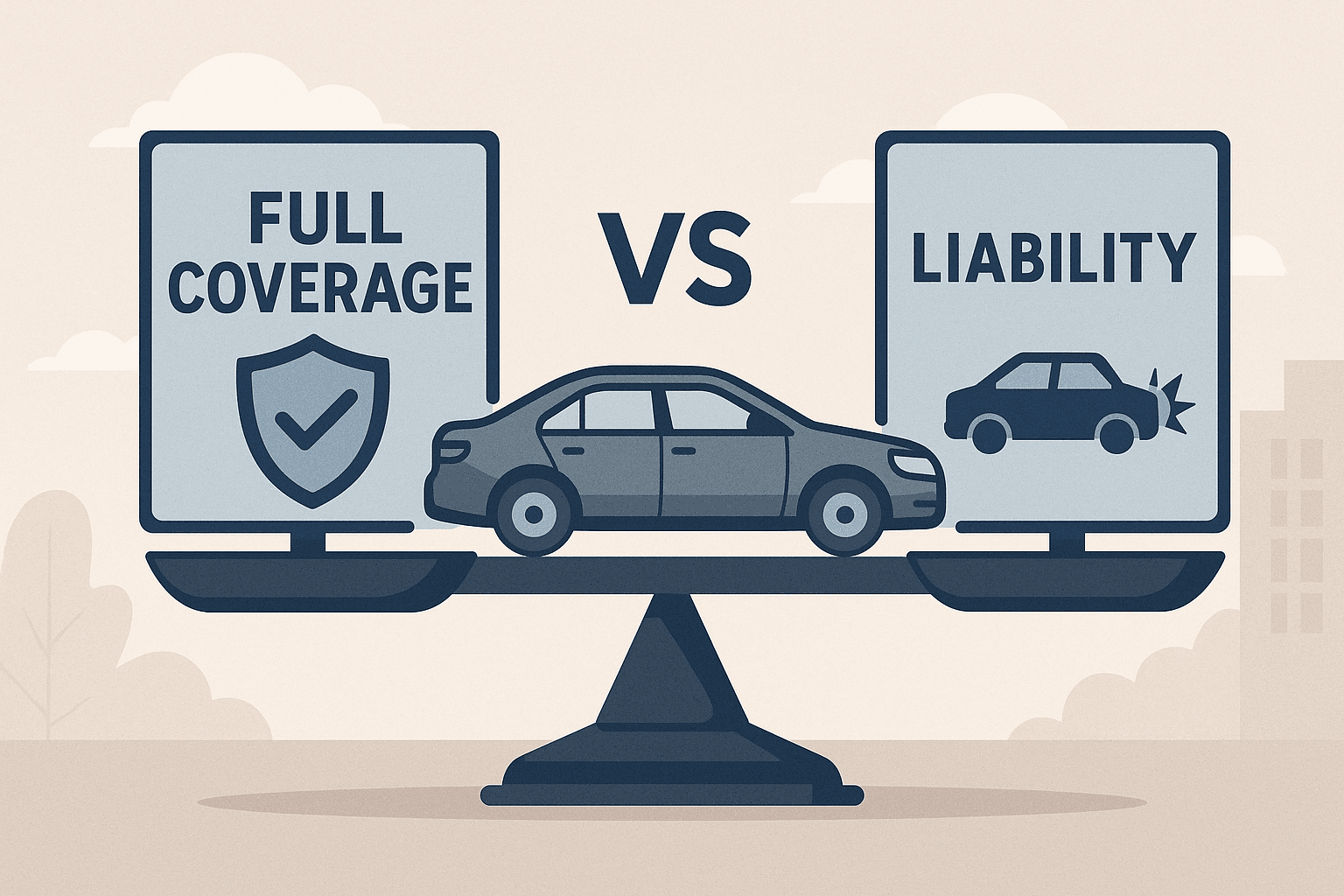
"Full coverage" and "liability" are the two ways drivers describe their auto policy, but they protect very different things. Liability covers damage you cause to others. Full coverage adds protection for your own car (learn more about what is pathward's equipment? business lender overview | rateroots) (learn more about what is amplify credit union? mortgage lender overview | rateroots). Picking correctly can save you hundreds a year — or save you from a financial hit you can't absorb.
This is general educational information, not insurance advice. Coverage requirements and pricing vary by state and insurer; confirm details with a licensed agent.
What liability car insurance covers
Liability is the legally required core of almost every auto policy. It pays for harm you cause to other people:
- Bodily injury liability — others' medical bills and lost wages when you're at fault.
- Property damage liability — repairs to the other driver's car or property.
What it does not cover: your own car, your own injuries (in most cases), theft, vandalism, or weather damage. If you total your own vehicle, liability pays you nothing.
Most states set minimum liability limits, but those minimums are often dangerously low. A single serious accident can exceed them, leaving you personally on the hook.
What full coverage adds
"Full coverage" isn't an official product — it's liability plus two add-ons that protect your own vehicle:
- Collision — repairs or replaces your car after a crash, regardless of fault.
- Comprehensive — covers non-collision losses: theft, vandalism, fire, hail, flood, falling objects, and animal strikes.
Lenders and leasing companies almost always require collision and comprehensive until the car is paid off, because the vehicle is their collateral.
The cost difference
Full coverage typically costs roughly two to three times more than liability-only, because it's insuring your car as well as your liability. The gap is the premium you pay for the peace of mind that your own vehicle is protected.
When to choose each — the decision rules
Choose full coverage if any of these are true:
- Your car is financed or leased (usually mandatory).
- You couldn't comfortably afford to replace the car out of pocket.
- The car is newer and holds significant value.
- You park or drive in higher-risk areas for theft, weather, or accidents.
Consider liability-only if all of these are true:
- The car is paid off (no lender requirement).
- Its value is low — a common guideline is that when annual full-coverage premiums exceed 10% of the car's value, dropping collision/comprehensive often makes financial sense.
- You have savings to replace the car yourself if it's totaled.
Worked example
If your car is worth $3,000 and full coverage costs $1,200/year more than liability, you'd pay $1,200 to insure a $3,000 asset — and after a deductible, a payout might only net you a couple thousand dollars. Many drivers in that spot self-insure with liability-only and bank the savings.
Quick comparison
- Required by law: Liability (in most states)
- Required by lenders/lessors: Full coverage
- Protects your own car: Full coverage only
- Cheaper premium: Liability-only
- Best for new/financed cars: Full coverage
- Best for old, paid-off cars: Liability-only
Frequently asked questions
Is full coverage actually "full"?
No. Even full coverage has limits and deductibles and may not include extras like gap insurance, rental reimbursement, or roadside assistance. Read what's actually on your policy.
Can I drop full coverage anytime?
If your car is paid off, yes — but if it's financed or leased, your lender requires it and may force-place expensive coverage if you cancel.
How do I lower full-coverage costs without dropping it?
Raise your deductible, bundle with home/renters insurance, ask about every discount, and compare at least three quotes — the same coverage can vary widely by insurer.
Bottom line: match coverage to your car's value and your loan status. New or financed cars need full coverage; older, paid-off cars worth little are often cheaper to insure with liability-only — and the 10%-of-value rule is the quickest gut check.
