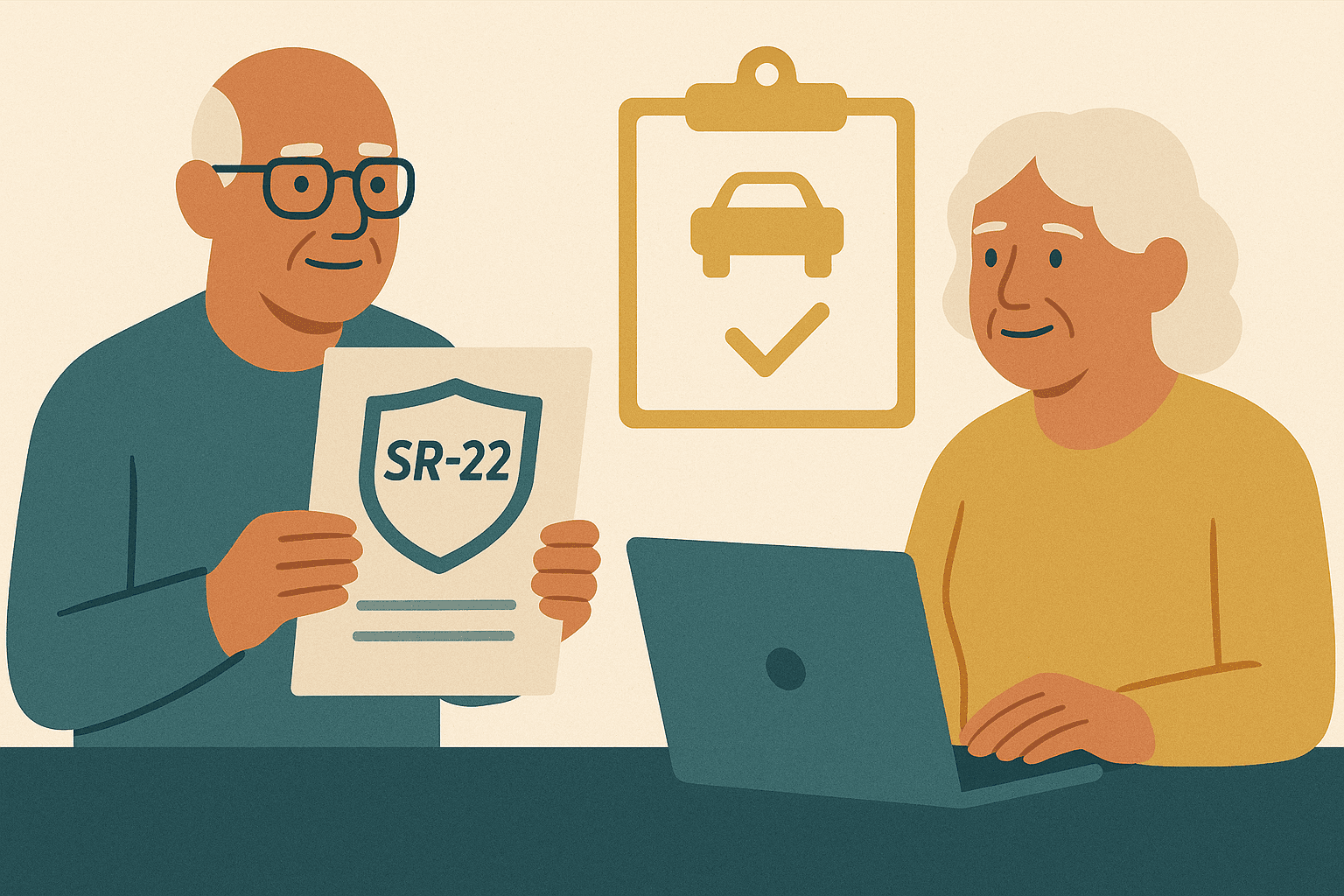
An SR-22 is not a type of insurance — it is a certificate your insurer files with the state to prove you carry at least the legal minimum liability coverage, usually required after a DUI, a serious violation, (learn more about bank statement loan requirements) (learn more about can i get working capital with low credit score?) (learn more about startup business loans: complete guide to funding new businesses) (learn more about what is a cash-out refinance and how does it work?) or driving without insurance. The SR-22 itself costs only about $15–$50 to file (learn more about what is caliber (newrez)? mortgage lender overview | rateroots) (learn more about what is citizens (franklin american)? mortgage lender overview | rateroots), but the underlying policy is typically 20%–90% more expensive because the state now classifies you as a high-risk driver. Carriers that specialize in high-risk auto — such as Progressive, GEICO, State Farm, and regional non-standard insurers — are usually the cheapest places to get one.
Here is exactly what an SR-22 is, how to get it, what it costs, and how to keep the price as low as possible.
What Is an SR-22?
An SR-22 (sometimes called a Certificate of Financial Responsibility) is a document your auto insurer submits to your state''s Department of Motor Vehicles confirming you meet the minimum required liability coverage. You do not file it yourself — you ask your insurance company to file it for you. Once filed, the state is automatically notified if your policy lapses or is canceled, which is the whole point: it guarantees ongoing proof of coverage for drivers the state considers higher risk.
A few states (including Florida and Virginia) use an FR-44 instead, which works the same way but often requires higher liability limits than the standard state minimum.
Who Needs an SR-22?
A court or your state DMV typically orders an SR-22 after events such as:
- A DUI or DWI conviction
- Reckless or aggressive driving
- Driving without insurance or without a valid license
- At-fault accidents while uninsured
- Too many points or violations in a short period
- Reinstating a license after a suspension
If you are required to carry one, you will usually be notified by the court or the DMV, and you generally must maintain it for three years, though the period ranges from one to five years by state.
How to Get an SR-22
The process is straightforward:
- Confirm the requirement. Check your court order or DMV notice for how long you need the filing and which form (SR-22 or FR-44) applies.
- Contact an insurer that files SR-22s. Not every company does. If your current carrier does, ask them to add the filing; if not, you will need to switch.
- Pay the filing fee. The one-time fee is usually $15–$50.
- Buy or keep a qualifying policy. Your liability limits must meet (or exceed, for FR-44) the state minimum.
- Wait for confirmation. The insurer files electronically, and the state updates your record — often within a few days.
If you do not own a car, ask about a non-owner SR-22 policy, which provides the liability coverage and filing you need to reinstate a license without owning a vehicle.
How Much Does SR-22 Insurance Cost?
There are two costs to separate:
- The filing fee: a flat $15–$50, one time.
- The higher premium: this is where the real expense lives. Because the SR-22 is tied to a high-risk classification (often a DUI), your annual premium can rise anywhere from a few hundred dollars to more than double what a clean-record driver pays. National averages for high-risk drivers commonly run $2,000–$4,000+ per year, but your rate depends heavily on your state, the violation, your age, and your vehicle.
The SR-22 does not itself raise your rate — the violation behind it does.
Cheapest Carriers for SR-22 Insurance
Rates vary widely by driver and state, so always compare at least three quotes. That said, these carriers are frequently the most affordable for high-risk drivers:
- Progressive — one of the most SR-22-friendly national carriers, with broad availability and competitive high-risk pricing.
- GEICO — often among the lowest quotes for drivers with a single serious violation.
- State Farm — competitive for many high-risk profiles and strong local agent support.
- Regional non-standard insurers (such as The General, Dairyland, and Mercury in applicable states) — built specifically for high-risk drivers and worth quoting alongside the majors.
Because two insurers can price the same driver very differently, comparison shopping is the single biggest lever on your final cost.
How to Lower Your SR-22 Premium
- Compare multiple quotes — the spread between carriers on a high-risk profile is often hundreds of dollars.
- Raise your deductible to lower the premium if you can absorb more out-of-pocket risk.
- Take a state-approved defensive driving or DUI course — some insurers offer credits.
- Bundle auto with renters or homeowners insurance where available.
- Keep the policy active and violation-free — every clean year moves you back toward standard rates.
- Ask about usage-based or telematics discounts to prove safe driving.
What Happens If Your Policy Lapses?
If your SR-22 policy is canceled or lapses, your insurer must notify the state, which typically triggers an immediate license suspension and restarts your required filing period. Set up automatic payments and never let coverage drop until the state confirms your obligation is complete.
The Bottom Line
An SR-22 is simply proof of insurance the state requires from high-risk drivers — cheap to file, but attached to a pricier policy. The fastest way to minimize the cost is to shop specialists like Progressive, GEICO, and State Farm, keep your coverage continuous, and let each violation-free year pull your rate back down.
This article is for general informational purposes only and is not legal or insurance advice. SR-22 rules, forms, and required coverage limits vary by state — confirm your specific requirements with your DMV or a licensed agent.
